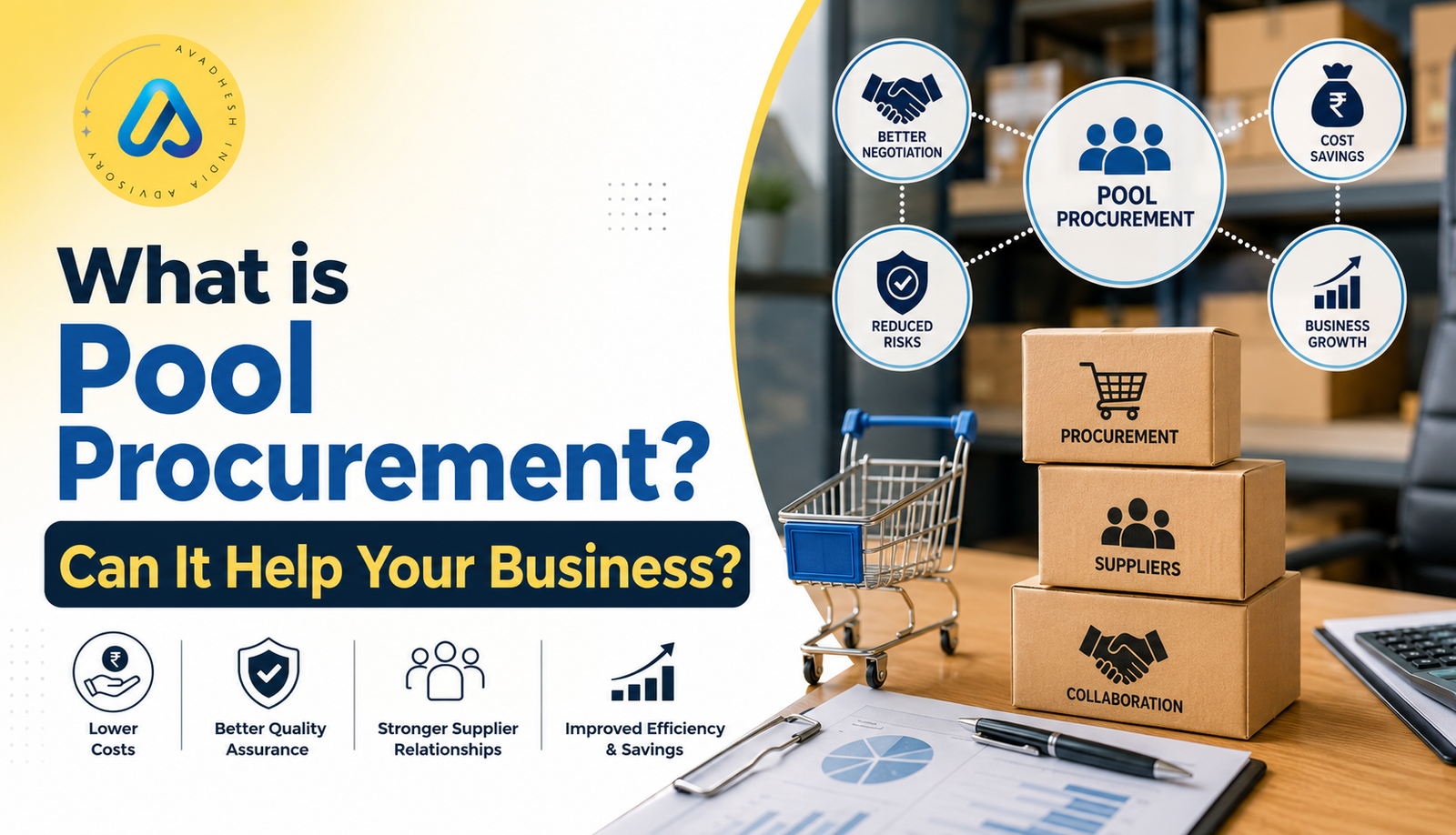
Buy like a giant.
Stay small.
Running a startup in 2026 isn’t cheap. Procurement quietly eats money, time, and focus — but the businesses that get it right early scale without constantly plugging financial leaks. Pool procurement is one of the smartest, most underused ways to do that.
So, what actually is it?
At its core, pool procurement is simple: a group of businesses with similar needs buying together instead of separately. It formalises collective buying power — instead of each company running its own negotiations, one lead or facilitator coordinates on behalf of everyone, securing better pricing, better terms, and access to suppliers who might not even take your call alone.
It isn’t new — large enterprises and governments have done it for decades. What’s changed is that it’s now genuinely accessible to startups and SMBs, and the savings are real.
Think like a supplier → when one startup asks for 10 software licences or 15 laptops, there’s little reason to offer a great deal. But when five startups walk in asking for 75 laptops collectively? That conversation looks very different.
How does it actually work?
More straightforward than most people expect — four stages, and you let someone else do the heavy lifting of negotiation.
Identify shared needs
IT hardware, software, cloud, managed security, office infrastructure. The more aligned the needs, the better the outcome.
Appoint a lead
A participating company, an industry body, or a third-party facilitator coordinates and manages the supplier relationship for everyone.
Negotiate together
Armed with combined volume, the lead pushes for bulk discounts, extended warranties, priority support, and better payment terms.
Distribute
Goods and services are shared among participants by individual requirement. You participate, you benefit — that’s it.
Which type fits you?
Not every pool looks the same. Knowing the difference helps you find the easiest way in.
Same industry, shared spend
Businesses from the same industry — say, a group of IT consultancies pooling software licences. The most common model and the easiest to enter, because everyone understands each other’s needs.
Across the supply chain
A startup, its vendors, and its service partners procuring shared tools or infrastructure together. More complex to coordinate, but powerful when it works.
Public consortiums
Public procurement groups that private SMBs can sometimes access for categories like hardware, connectivity, or utilities. Worth exploring if your spend falls into regulated categories.
Someone else runs it
Managed by a neutral aggregator — a procurement platform or association — on behalf of all members. For most startups with no procurement function, this is the most practical model: you just participate and save.
Why it makes a real difference
It’s more than a lower invoice. Pooling reshapes cost, time, access, risk, contract terms, and even your speed to launch.
Discounts you reinvest
Put a small consultancy into a pool with four similar businesses and you get collective volume, proper negotiation, and a meaningful discount. That money doesn’t disappear — it becomes a new hire, a marketing push, a product feature.
Often 15–25% depending on category & supplierHours returned to your team
Negotiations are genuinely time-consuming, and startup teams already wear three hats. Pooling transfers most of that burden to the lead — your involvement shrinks to reviewing terms and confirming requirements.
Doors that stay shut, opened
The best cybersecurity firms, enterprise cloud providers, and premium hardware vendors don’t prioritise small accounts. In a group with meaningful spend, you’re not a small account — you get the same vendors, support tiers, and service quality enterprises take for granted.
Shared, not shouldered
Depending too heavily on one supplier is dangerous. In a pool, a supplier’s failure is distributed across members, and the group’s collective leverage gives the lead far more power to push back, escalate, or switch than you’d have alone.
Beyond just unit price
A pool negotiates Net-60 or Net-90 terms, flexible SLAs, priority support, dedicated account management, and exit clauses. For a cash-flow-conscious startup, Net-60 can be worth more than a 10% discount — and it’s nearly impossible to get alone.
Skip weeks of groundwork
Join an established pool and the hard work is done: vendors vetted, contracts negotiated and reviewed, onboarding familiar. You step into a framework that took months to build — and benefit from day one.
Pool procurement vs. going it alone
Where each approach wins, at a glance.
| Factor | Traditional procurement | Pool procurement |
|---|---|---|
| Negotiating power | Limited — you’re one small buyer | Strong — collective volume changes the dynamic |
| Time investment | High — every vendor, every time | Shared — the lead handles the heavy lifting |
| Supplier access | Restricted to SMB-friendly vendors | Opens doors to enterprise-tier suppliers |
| Risk | Falls entirely on your business | Distributed across the pool |
| Contract terms | Standard boilerplate | Actively negotiated, often more favourable |
| Data sharing required | None | Yes — with the pool coordinator |
| Best for | Highly unique or confidential needs | Recurring, common procurement categories |
The honest answer: use traditional procurement where your needs are genuinely unique or sharing data isn’t appropriate. Use pool procurement for everything repeatable — especially IT hardware, software subscriptions, cloud, and managed services.
Is it right for you?
Pool procurement isn’t for everyone. Five honest checks before you pursue it.
Your needs must overlap
The closer the alignment with the group, the more you benefit. Highly specific or niche requirements may not fit a pool — and forcing it frustrates everyone.
You’re comfortable collaborating
Pooling means sharing some data — volumes, usage patterns, budget ranges — with the coordinator and possibly other members. In a fiercely competitive market, weigh who else is in the pool first.
Leadership matters enormously
A well-run pool delivers; a poorly coordinated one just creates confusion. Understand who leads, how decisions are made, and the escalation process if something goes wrong.
Understand the commitments
Some pools require minimum purchase volumes to qualify for terms. Know exactly what you’re committing to — and what happens if needs change mid-contract. Flexible pools with no hard minimums suit early-stage best.
Get data privacy clarity
Before joining: what data is shared and with whom, whether pricing stays confidential, and whether your participation can be disclosed externally. Ask before you’re inside, not after.
Getting started is simpler than you think
No legal structure, no formal consortium, no dedicated procurement team required. Three businesses agreeing to approach a vendor together is already a pool in practice.
“We’re both buying the same thing. Why are we doing it separately?”
Start with your network
Reach out to founders and operators in your industry whose procurement needs likely mirror yours. Many informal buying groups begin with exactly that conversation.
Tap industry groups
Look at the associations and business groups you already belong to. Many run procurement programs or buying groups members can access immediately.
Talk to your supplier
Ask directly whether they offer preferential terms for group buyers, or have existing arrangements with other clients you could join.
Consider a facilitator
If coordination bandwidth is a real constraint — as it is for most early-stage startups — a third-party facilitator manages it for you, benefits without the overhead.
Where your size stops being a disadvantage.
Pool procurement isn’t just a cost-saving exercise — it’s a smarter way to operate, where your network becomes a genuine business asset. In a market where margins are tight and every operational decision compounds, that shift matters more than most founders realize until they’ve experienced it firsthand.
Your network becomes an asset. Your size stops holding you back.